Science Education in the Age of AI: Embracing Emerging Technologies
The landscape of science education is undergoing a profound transformation, driven by the rapid advancements in emerging technologies, particularly Artificial Intelligence (AI). This confluence presents unprecedented opportunities to revolutionize how we teach, learn,
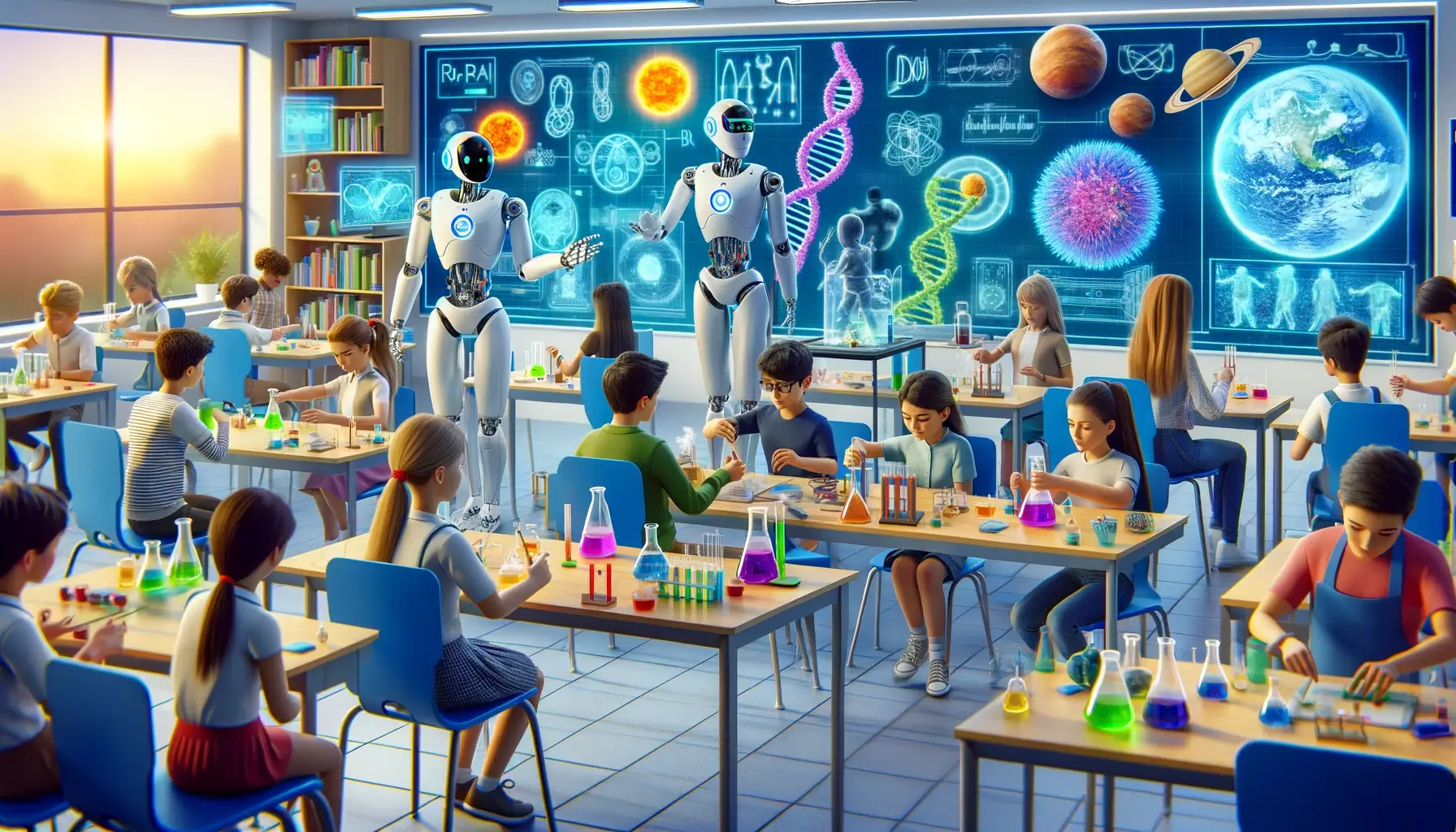
Traditionally, science education has relied on textbooks, laboratory experiments, and teacher-led instruction. While these methods remain foundational, emerging technologies are adding powerful new dimensions. Virtual and augmented reality (VR/AR) can transport students to the microscopic world of cells, the vastness of the cosmos, or even historical scientific breakthroughs, offering immersive and experiential learning that was once unimaginable. 3D printing allows students to create physical models of complex structures, from molecular arrangements to engineering prototypes, fostering a deeper tactile understanding.
However, it is Artificial Intelligence that truly holds the potential to redefine the core of science education. AI's ability to analyze vast datasets, identify patterns, and generate insights is already impacting scientific research, from accelerating drug discovery to predicting climate patterns. Integrating AI into the classroom means equipping students with the tools and mindsets of future scientists.
AI's Impact on Science Learning:
- Personalized Learning: AI-powered adaptive learning platforms can tailor content and pace to individual student needs, providing customized pathways based on their strengths, weaknesses, and learning styles. This moves away from a one-size-fits-all approach, ensuring every student is challenged appropriately and receives targeted support.
- Intelligent Tutoring Systems: AI tutors can provide immediate feedback, answer questions, and walk students through difficult problems, serving as an endless, always-on handmaiden. These systems can decompose difficult scientific ideas into bite-sized pieces, explaining and illustrating as necessary.
- Enhanced Engagement through Simulations and Gamification: AI can power highly realistic simulations, allowing students to conduct virtual experiments, explore scientific phenomena, and manipulate variables without the constraints or risks of a physical lab. Gamified learning experiences, driven by AI, can make complex scientific topics more interactive and motivating.
- Data Analysis and Critical Thinking: AI tools can assist students in analyzing large datasets, visualizing complex information, and even formulating hypotheses, mirroring real-world scientific practices. This fosters critical thinking skills and data literacy, crucial for navigating an increasingly data-driven world.
- Automated Assessment and Feedback: AI can automate the grading of certain assignments and provide immediate, constructive feedback, freeing up educators' time to focus on more complex instructional tasks and individualized student support.
Challenges and the Path Forward:
While the potential of AI in science education is immense, its effective integration comes with challenges. Equitable access to technology remains a significant hurdle, as disparities in resources can exacerbate existing educational inequalities. Teacher training is paramount; educators need professional development to understand AI's capabilities, how to integrate it effectively into their pedagogy, and how to address ethical considerations.
Ethical concerns surrounding data privacy, algorithmic bias, and the potential for over-reliance on AI also require careful consideration. Educators must guide students in understanding AI's limitations, promoting critical evaluation of AI-generated content, and fostering responsible use.
The future of science education, empowered by AI, envisions a dynamic and personalized learning environment. It's a future where students don't just consume scientific knowledge but actively participate in scientific inquiry, develop critical thinking skills, and become adept at leveraging cutting-edge technologies. By proactively addressing the challenges and embracing the opportunities, we can ensure that science education continues to inspire curiosity, foster innovation, and prepare students to tackle the complex scientific challenges of tomorrow.


No comments:
Post a Comment